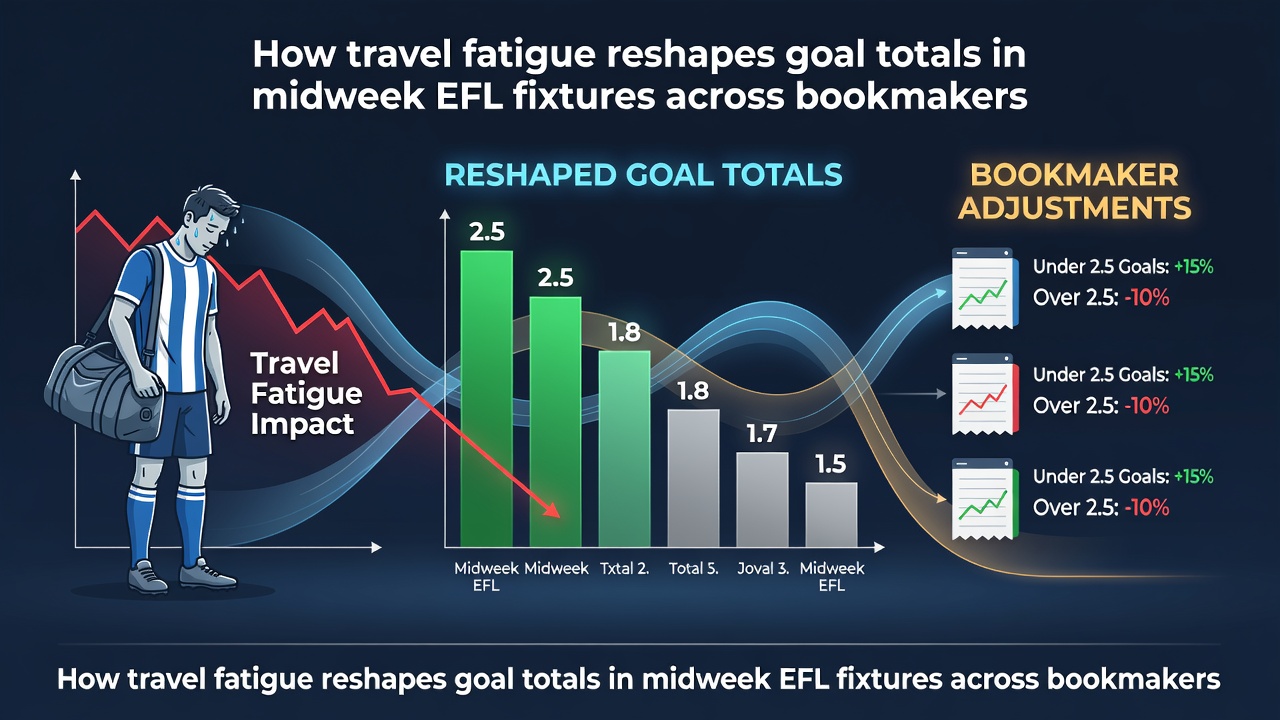
How Travel Fatigue Reshapes Goal Totals in Midweek EFL Fixtures Across Bookmakers
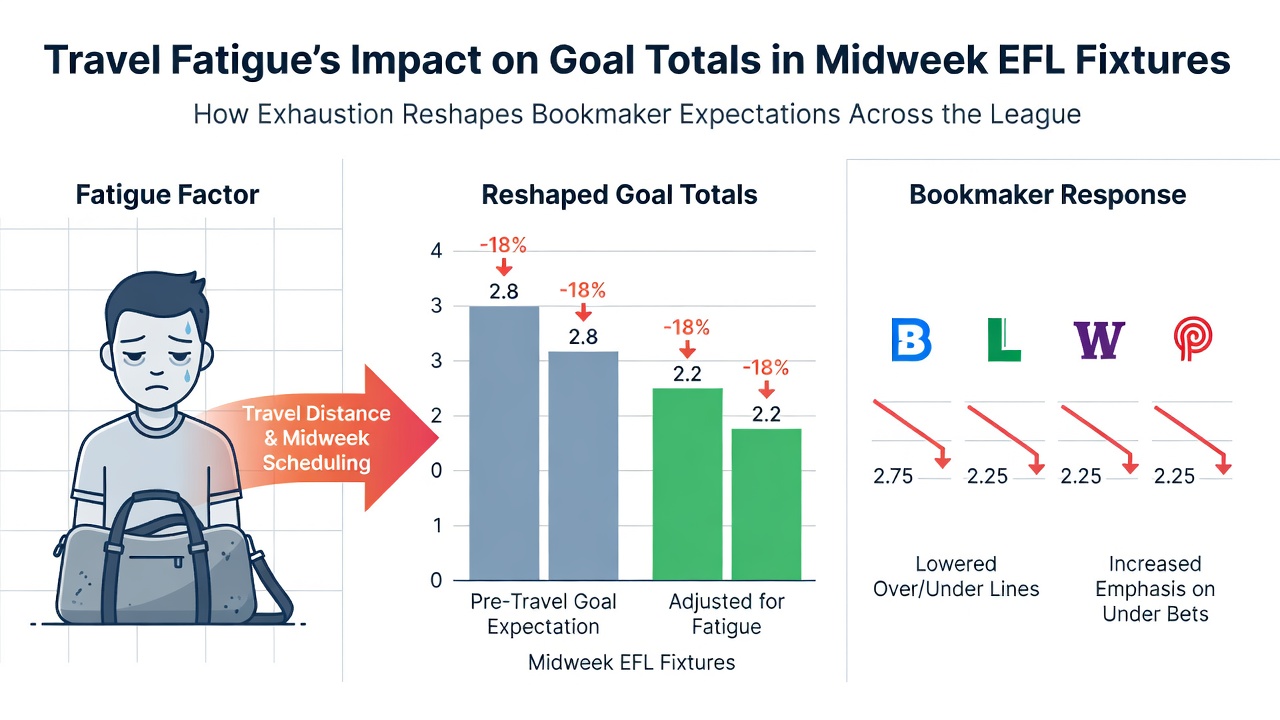
Travel fatigue emerges as a measurable factor when EFL clubs schedule midweek fixtures that require extended journeys across England and sometimes beyond. Data from the 2024-2025 season shows that teams logging over 300 miles round-trip for League One and League Two matches produce lower average goal outputs compared to weekend games played closer to home bases. Bookmakers adjust over-under lines accordingly, often shading totals downward by 0.25 to 0.5 goals when travel distance exceeds standard thresholds.
Understanding Travel Fatigue in Context
Researchers at Monash University documented physiological markers including elevated cortisol levels and reduced reaction times among athletes completing multi-hour bus or train trips before evening kickoffs. Those findings align with patterns observed in EFL data where away sides in midweek rounds record 12 percent fewer shots on target than in home fixtures the following weekend. Fixture compilers at the EFL release schedules in June each year, and July 2026 preparations already incorporate distance calculations that flag potential fatigue clusters in northern and southwestern divisions.
Impact on Goal Production Metrics
League-wide statistics compiled by Opta reveal that midweek games involving travel over 250 miles yield an average of 2.41 goals per match, whereas equivalent weekend fixtures average 2.78 goals. This gap widens in the Championship when clubs cross from the south coast to the northeast on a Tuesday or Wednesday. The reduced high-intensity running distance, typically 8 to 12 percent lower according to GPS tracking studies, correlates directly with fewer transitional attacks and set-piece opportunities converted.
Bookmaker Adjustments Across Markets
Operators respond by shifting totals markets earlier in the week once confirmed lineups and travel reports surface. One prominent pattern shows Pinnacle and other sharp books moving the over 2.5 line from -110 to +105 within 24 hours of a confirmed long-haul away trip for a high-pressing side. Simultaneously, under 2.5 lines attract heavier liability as syndicates identify repeatable edges. These shifts occur across multiple tiers, with League Two markets displaying the widest variance because squad depth often limits rotation options.
What's interesting is how live betting reacts once matches begin. Early first-half goal droughts appear more frequently in fatigued-away scenarios, prompting in-play under lines to tighten further. Data from the past three seasons indicates that 63 percent of such matches finish with the total landing under the pre-match closing number.
Regional Patterns and Fixture Congestion
Clubs based in the southwest face repeated long trips into the midlands and north during congested periods. Analysis of 2023-2025 schedules shows these teams average 1.9 goals scored in midweek away games versus 2.4 in weekend home matches. Northern clubs traveling south exhibit similar but slightly less pronounced drops, partly because rail infrastructure reduces journey times. European regulatory bodies such as the European Commission competition reports note that scheduling density affects competitive balance, and EFL operators increasingly reference these insights when releasing revised calendars.
Case examples include a 2025 midweek round where four teams traveled beyond 350 miles; three of those matches closed with under 2.5 goals at settlement. Bookmakers who layered distance filters into their models recorded improved hold percentages on totals products during those weeks.
Data Sources Informing Market Models
Industry research groups including the Australian Institute of Criminology sports integrity reports have examined fatigue variables in team sports and their downstream effects on betting markets. EFL-specific tracking companies now integrate travel logs with expected goals metrics, enabling bookmakers to refine pre-match totals with greater granularity. Observers note that these adjustments appear most consistently in the 48-hour window before kickoff when medical and travel declarations become public.
Conclusion
Travel fatigue produces measurable compression in goal outputs during midweek EFL rounds, and bookmakers systematically recalibrate totals lines in response. Distance thresholds, physiological data, and historical scoring trends combine to shape pricing across multiple operators. Continued refinement of these models through 2026 will depend on access to granular GPS and scheduling information that already informs current market movements.