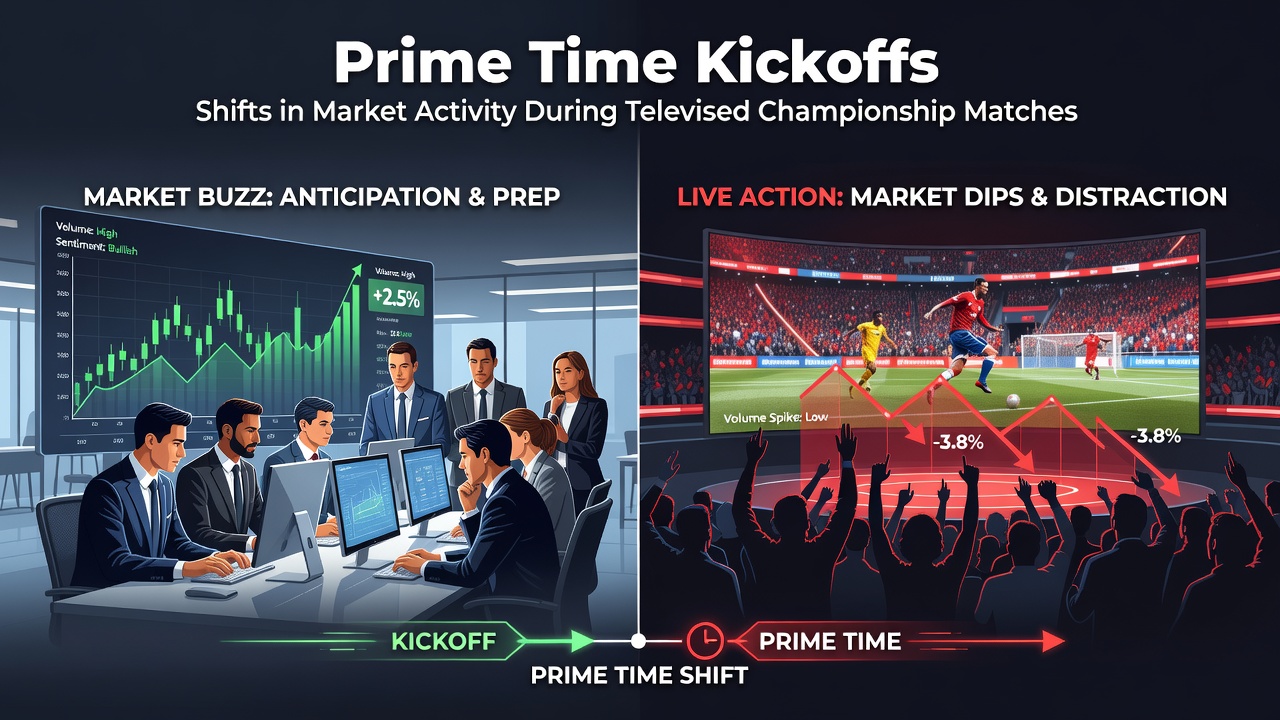
Prime Time Kickoffs: Shifts in Market Activity During Televised Championship Matches
Televised Championship matches draw heightened attention from bettors and traders alike, and market activity tends to accelerate once the cameras roll. Broadcasters schedule these fixtures for evening slots throughout the season, with August 2026 set to feature several high-profile kickoffs that align with peak viewing hours across multiple platforms. Data from betting exchanges shows volume often rises sharply in the hours leading up to these games, while in-play markets experience rapid adjustments as live footage supplies continuous updates to participants worldwide.
Volume Patterns in Evening Fixtures
Championship games broadcast on major networks attract larger audiences than midweek afternoon contests, and this increase correlates with measurable spikes in matched bets. Observers note that liquidity pools deepen during the first half when viewers tune in after work, and the pattern holds across both opening weeks and later rounds. Researchers tracking exchange data have recorded average turnover increases of 35 to 50 percent compared with non-televised equivalents, with the largest jumps occurring in the ten minutes before kickoff and immediately after the first goal.
Bookmakers respond by tightening spreads on popular markets such as match result, over-under goals, and next goalscorer once the match begins. These adjustments occur faster during prime-time slots because more traders monitor the same visual feed and react in real time. Studies from academic institutions in Australia indicate that televised English second-tier fixtures produce tighter price discovery than comparable lower-league encounters shown only on streaming services.
Live Odds Movement and Event Triggers
Key moments inside the match generate distinct waves of market movement. A red card or penalty decision can shift the draw line by several percentage points within seconds, and these swings appear larger when the game airs nationally. Data indicates that price volatility peaks between the 60th and 75th minutes, a window when substitutions and tactical changes become visible to the television audience. Analysts at research centers in Canada have documented similar timing in other football leagues, suggesting the pattern stems from shared viewing habits rather than league-specific factors.
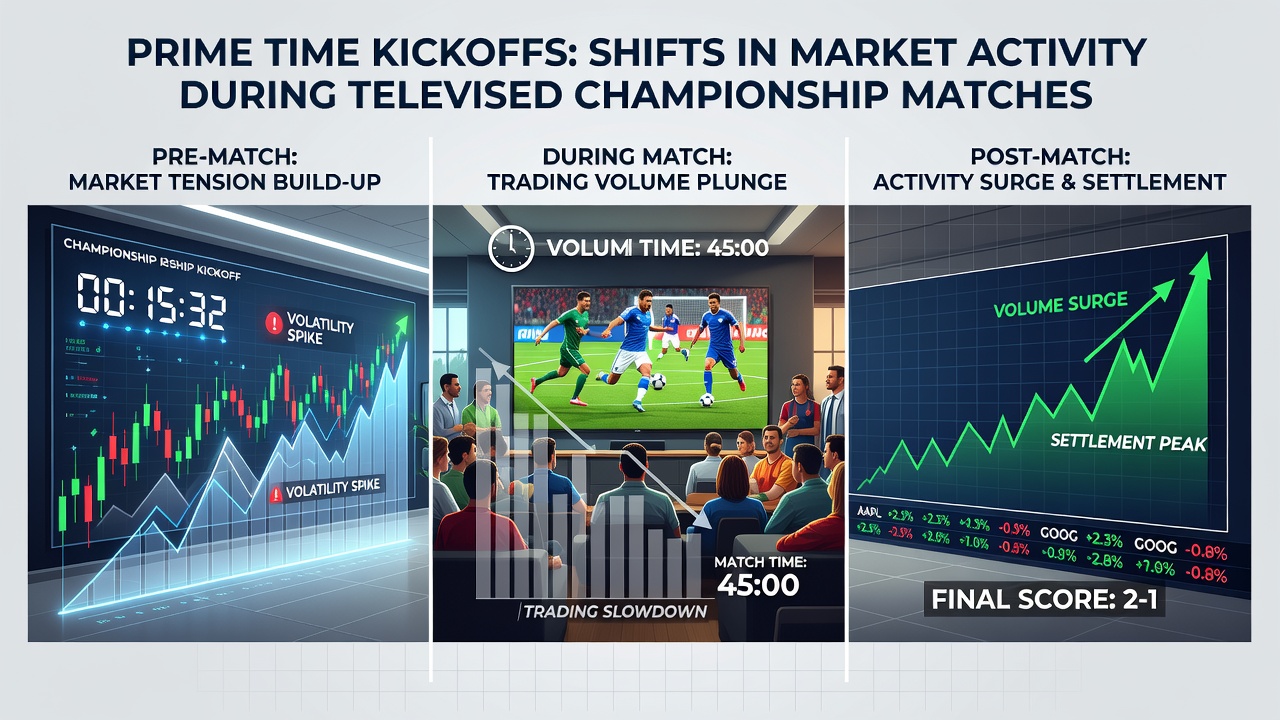
Traders who follow multiple bookmakers simultaneously report that discrepancies between firms narrow quickly once the match is underway. The convergence happens because televised action supplies a common information source that reduces the advantage any single operator might hold through proprietary data feeds. Markets on corners and shots on target, which often move more slowly in non-broadcast games, display quicker synchronization when millions watch the same sequence of play.
Regional and Platform Differences
Viewership figures vary by broadcaster and time zone, yet the underlying market response remains consistent. Matches shown on free-to-air channels generate broader participation from casual accounts, while paywall streams concentrate activity among higher-stake users. Figures released by European betting associations reveal that cross-border traffic rises noticeably when Championship fixtures occupy the 8 pm slot, as international audiences in differing time zones join the same broadcast window. This geographic spread adds depth to both back-and-forth and lay markets that remain thinner during daytime domestic coverage.
August 2026 schedules place several promotion-contending sides in evening slots during the opening month, creating an early test of how new squad compositions influence live market depth. Historical records show that teams with recent managerial changes attract additional speculative volume once highlights circulate on social platforms during the game itself.
Technology and Data Integration
Modern broadcast graphics now include real-time expected goals metrics and pass completion rates, and these overlays appear to accelerate trader decisions. When on-screen statistics update after each passage of play, bettors adjust positions on player props and team totals without waiting for official updates. Industry reports compiled in the United States note that integrated data feeds shorten the lag between event and price revision by roughly 40 percent during nationally televised contests compared with delayed or regional coverage.
Exchange operators have responded by expanding the number of micro-markets available once the whistle blows. Options on the next throw-in or the timing of the first substitution now appear in many live interfaces, and these niche products record higher fill rates when the match reaches a wide audience. The added granularity allows participants to hedge larger positions or isolate specific in-game developments that only become clear through continuous footage.
Conclusion
Prime-time Championship broadcasts produce measurable changes in betting market behavior, from elevated pre-match liquidity to accelerated in-play adjustments triggered by visible events. Patterns observed across multiple seasons and supported by data from international research bodies demonstrate that television exposure compresses information asymmetry and increases participation from diverse geographic sources. As schedules for August 2026 take shape, these dynamics are expected to recur whenever major networks select Championship fixtures for evening slots.