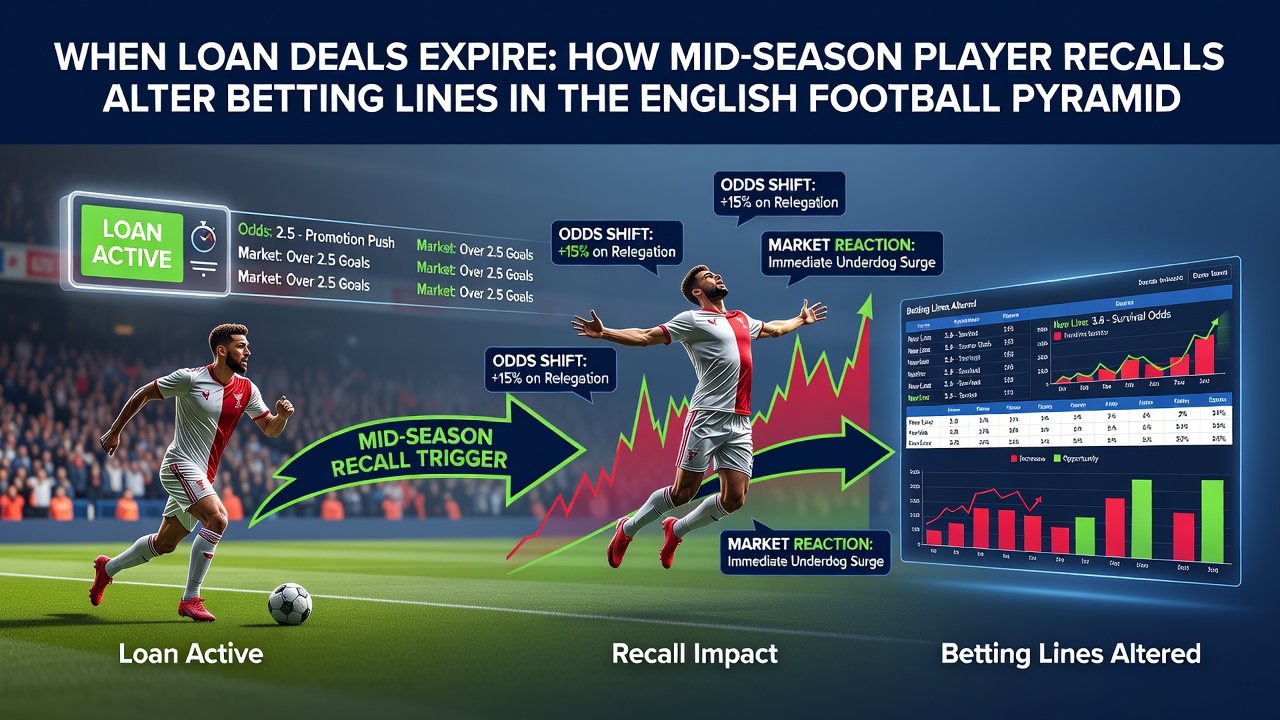
When Loan Deals Expire: How Mid-Season Player Recalls Alter Betting Lines in the English Football Pyramid
Loan arrangements in the English football pyramid often run from the summer window straight through the January period, yet many contain recall clauses that activate without warning once a parent club needs depth, and those sudden returns reshape squad options right in the middle of campaigns. When a player departs a Championship or League One side to rejoin a Premier League parent, the immediate drop in available talent forces managers to adjust formations, and bookmakers respond by shifting odds on upcoming fixtures within hours of the announcement. Data compiled by FIFA's Transfer Matching System shows that mid-season recalls across England increased by double digits between 2023 and 2025, with Championship clubs experiencing the highest volume because they rely heavily on temporary arrivals for promotion pushes.
How Recall Clauses Operate Across the Pyramid
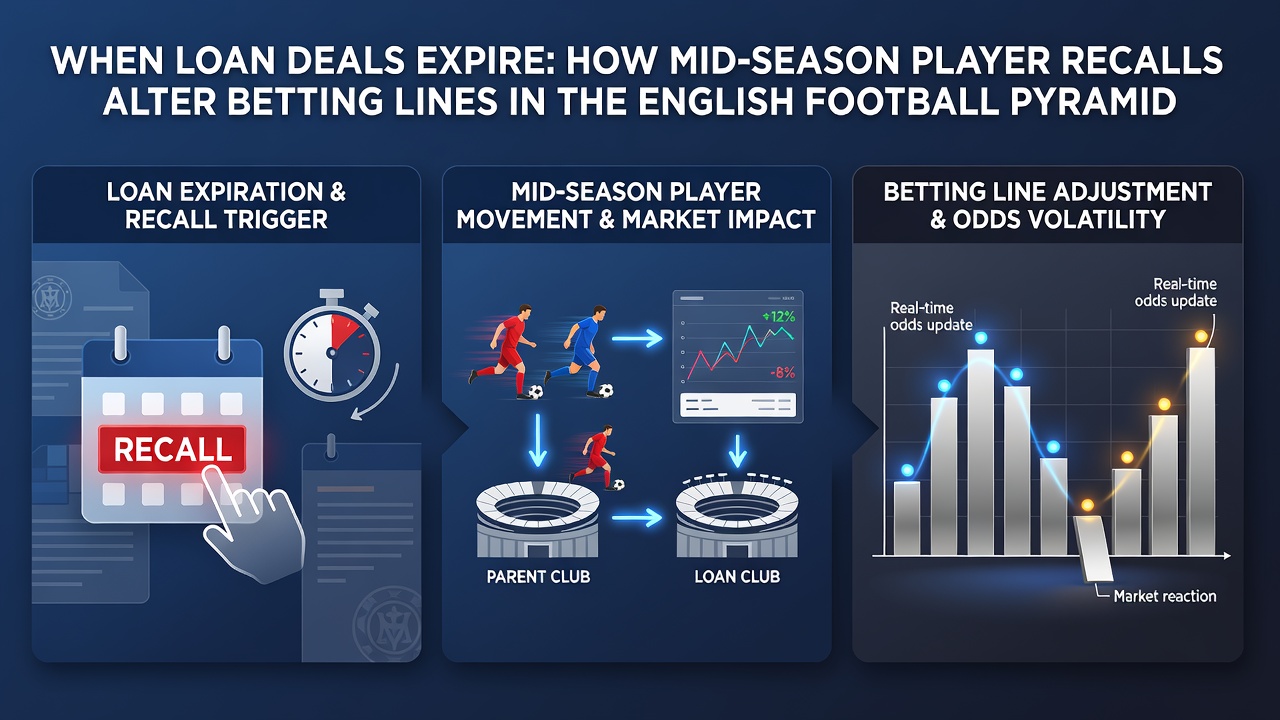
Recall provisions sit inside most loan contracts at every level from the Premier League down to League Two, allowing the lending club to terminate the deal on short notice, and clubs exercise these rights most often in January when injury lists grow or European commitments demand extra bodies. A striker recalled from a League One promotion hopeful leaves that team without its leading goal threat, while the parent side gains a fresh option for its own bench; the ripple effect reaches betting markets because both fixtures now carry altered probabilities. Observers note that lower-league sides suffer more pronounced changes because their squads contain fewer high-quality replacements, whereas Premier League teams absorb the same move with minimal disruption to their depth charts.
Market Reactions and Line Adjustments
Betting operators monitor official club statements and social media announcements for recall news, then update markets on next-match win probabilities, over-under totals, and player performance props before the next trading session opens. When a key midfielder returns to a Premier League parent from a Championship loan spell, the Championship side's implied win percentage often drops several points against its next opponent, and those shifts appear fastest on in-play platforms where algorithms track squad news in real time. Figures released by the CIES Football Observatory indicate that average goal expectations for sides losing a recalled player fall by roughly 0.3 goals per game in the short term, a margin that directly influences both handicap and total goals lines across multiple bookmakers.
Examples from Recent Seasons
During the 2024-25 campaign a forward recalled from a League Two club to its Championship parent coincided with an immediate three-match winless streak for the lower side, and several operators lengthened that team's price for automatic promotion by more than two points within 48 hours. In another instance an August 2026 pre-season loan that ended early in January left an EFL side without its most creative wide player, prompting sharp movements in both team total goals and clean sheet markets for the following weekend. Those who've tracked these patterns across multiple seasons report that the largest line movements occur in the Championship because promotion and relegation margins remain tight and every point carries extra weight in the final table calculations.
Impact on Different Betting Markets
Player-specific markets react quickest when a recalled individual had been starting regularly, and both anytime goalscorer and assist props for that player disappear or shorten dramatically once the announcement lands. Team-level markets such as match winner and Asian handicap lines move more gradually as bookmakers assess replacement options and tactical adjustments, yet the direction of travel stays consistent: sides losing personnel see their odds lengthen while opponents see theirs shorten. Research from the European Club Association highlights that clubs in the lower reaches of the pyramid maintain smaller squads on average, so the loss of one loaned player represents a larger percentage of total available talent and therefore produces more volatile line changes.
Timing and Frequency of Recalls
Most recalls cluster in the two weeks immediately before the January transfer window closes, although emergency clauses allow earlier terminations when a parent club faces a sudden crisis, and these unpredictable timings leave less opportunity for markets to settle before fixtures begin. Data from the EFL shows that League One and League Two sides lose loaned players at roughly twice the rate of Championship clubs during January, partly because Premier League academies recall prospects for cup runs or to protect their development pathways ahead of the summer window. The resulting fixture congestion for those lower sides compounds the effect because replacements often arrive too late to influence the next round of matches.
Conclusion
Mid-season loan recalls introduce measurable shifts in squad composition that translate directly into adjusted betting lines throughout the English football pyramid, and operators continue to refine monitoring systems to capture these changes faster. The pattern repeats each January as clubs balance short-term needs against longer-term development goals, leaving analysts and markets to recalibrate expectations around the remaining fixtures. Patterns observed leading into August 2026 suggest the same dynamics will persist as long as loan agreements retain flexible recall language and squad depths remain uneven across the leagues.